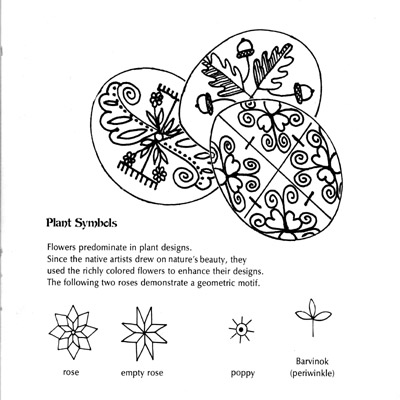
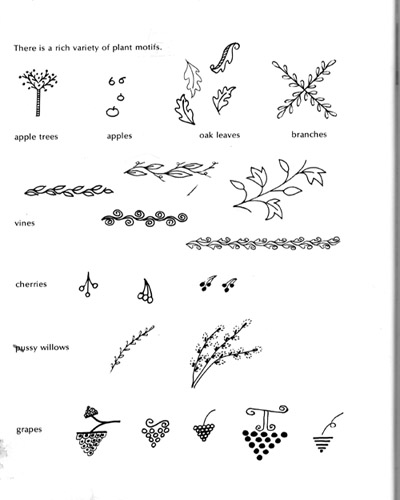
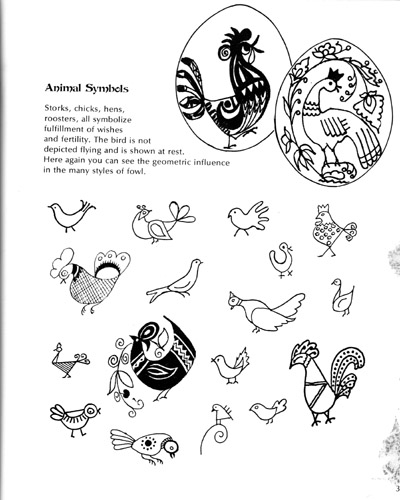
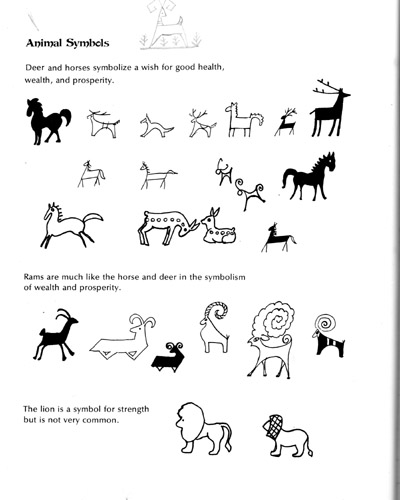
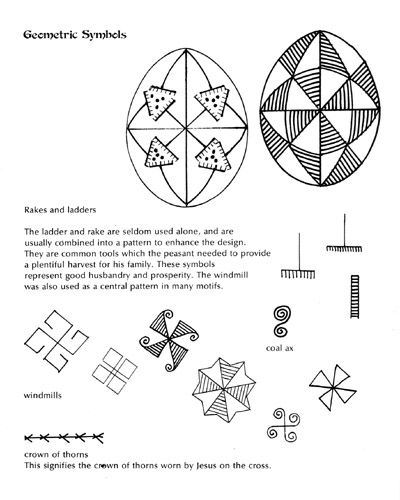
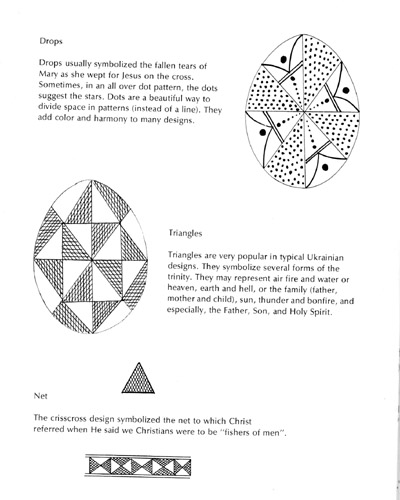
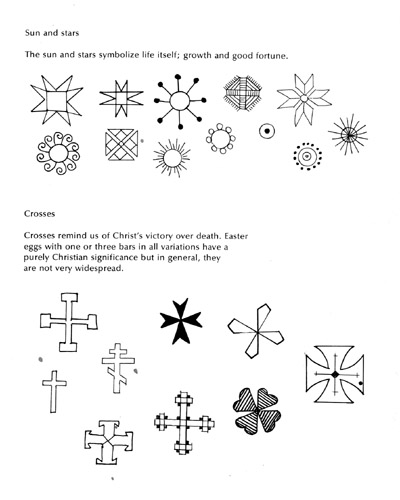
The smooth , symmetrical shape of the egg lends itself to the beautiful patterns which have developed over the centuries. Pysanky designs are usually intended to suggest a thing rather than to picture it exactly. Pysanky patterns fall into three general categories: plant, animal, and geometrical.


It is not only ornaments on Easter eggs which carry symbolic weight; colors also make a difference. Every area of Ukraine had its preferred color combinations. Although the oldest Easter eggs were simply two-toned, it was believed that the more colors on a decorated egg, the more magical powers it held. A multi-colored egg could thus bring its owner a better fate.
The colors used in pysanka are rich in symbolism. Although each region of Ukraine had its palette of symbols, patterns, designs, and colors, certain meanings were associated with the following colors:
1) White - Signified purity, birth, light, rejoicing, virginity.
2) Yellow - The symbol of light and purity. It signified, youth, love, the harvest and perpetuation of the family. It is the color consecrated to the light deities, and the sun, stars, and moon. It is the Christian symbol of reward and recognition.
3) Gold - Spirituality, wisdom.
4) Orange - The symbol of endurance, strength, and ambition. The color of a flame represented passion tempered by the yellow of wisdom. It is also the symbol of the everlasting sun.
5) Pink - Success, contentment.
6) Green - The color of fertility, health, and hopefulness; of spring, breaking bondage, freshness, and wealth. In the Christian era it represents bounty, hope, and the victory of life over death. Green is the color of Christmas, Easter, and the Epiphany.
7) Red - The magical color of folklore signifying action, charity, and spiritual awakening. It also represented the sun and the joy of life and love. Pysanky with red fields or motifs are often given to children. In the Christian era it represents the divine love and passion of Christ, hope, passion, blood, fire, and the ministry of the church.
8) Blue - Represented blue skies or the air, and good health, truth, and fidelity.
9) Purple - Represented fasting, faith, trust, and patience.
10) Brown - Represented Mother Earth and her bountiful gifts; earth, harvest, generosity.
11) Black - Represented constancy or eternity, the center of the Earth, the darkest time before dawn. Black also signified death, fear, and ignorance.